European premiere · Porto, Portugal · 15–16 January 2027
YOU CAN SEE THE SCAN.
CAN YOU SEE WHAT MATTERS?
This is not another CBCT course. This is an intensive, hands-on challenge to the way you interpret images, recognize disease, and make clinical decisions. Advanced CBCT interpretation meets practical AI, taught by two experts who approach diagnosis from different but complementary disciplines.
GET FIRST ACCESS TO REGISTRATION →Priority notification only. No payment required.
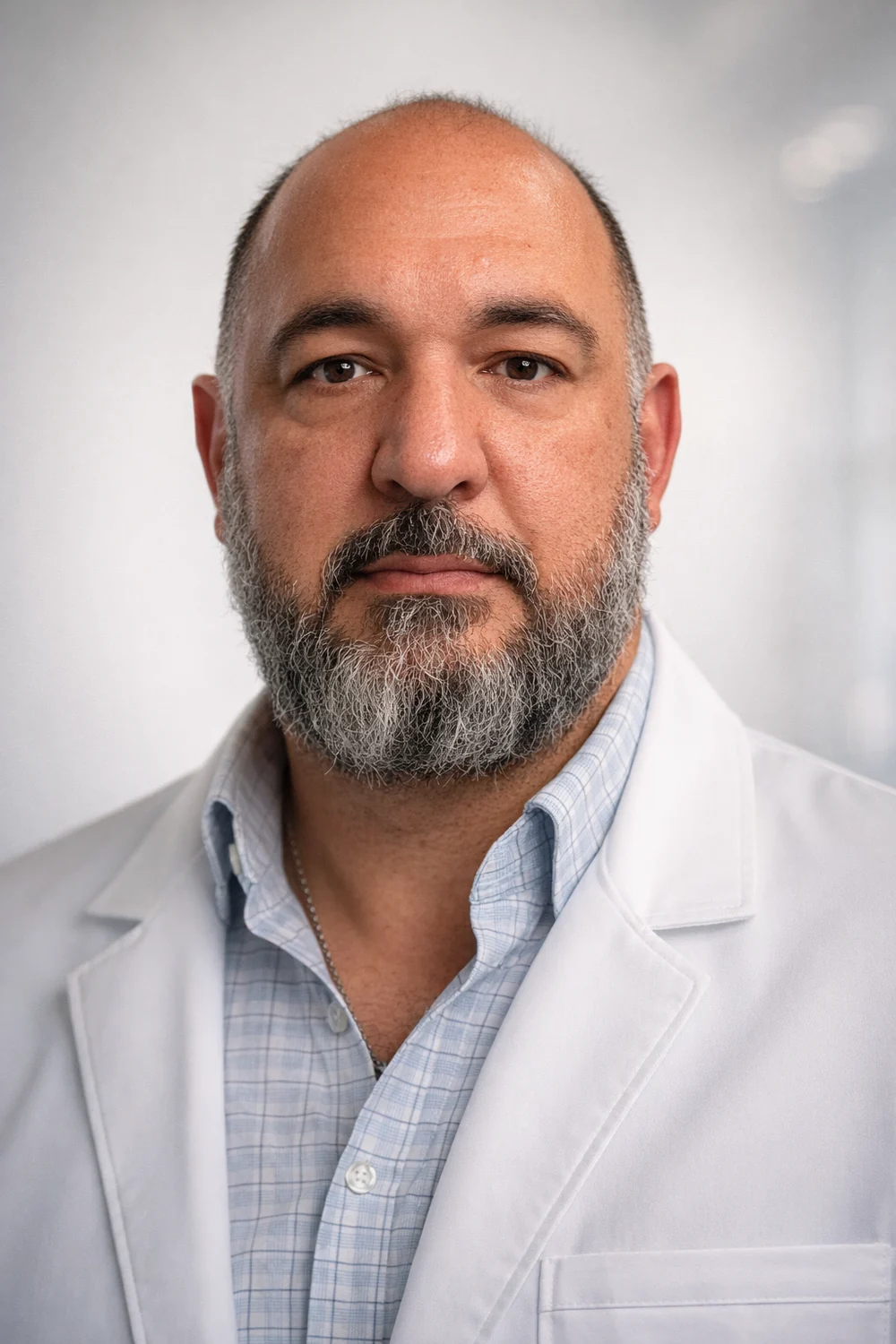
Bruno Azevedo, DDS, MSBoard-Certified Oral & Maxillofacial Radiologist · Endodontist
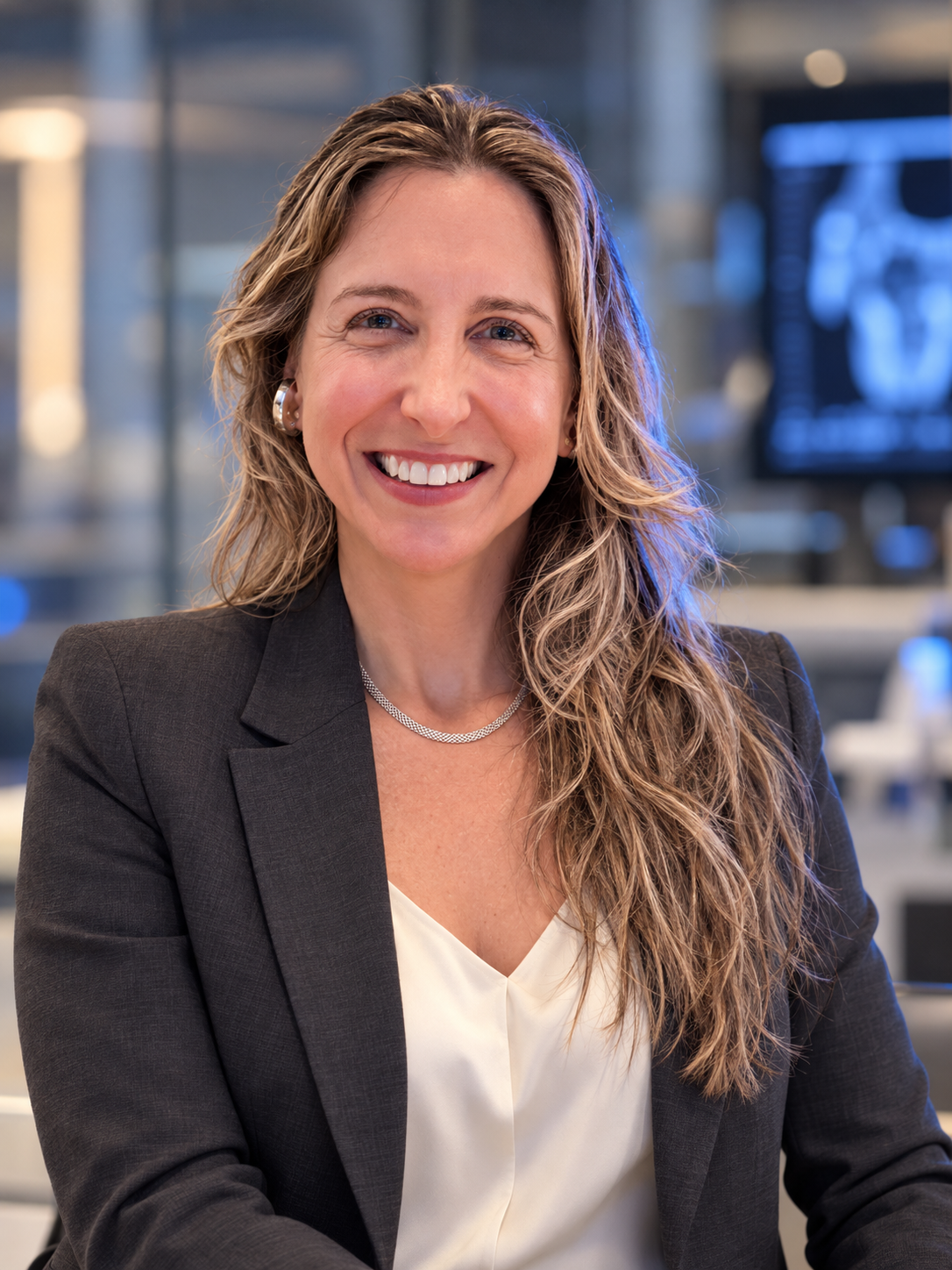
Paula Caffer, PhDArtificial Intelligence · Digital Dentistry · Research
The idea that changes everything
WHAT YOUR BRAIN DOES NOT KNOW,
YOUR EYES CANNOT SEE.
A sharper scan is not the same as a sharper diagnosis. You cannot recognize a finding you have never learned to look for. Our mission is to change what you notice, what you question, and what you do next.
A different standard of interpretation
MOST CLINICIANS LOOK AT CBCT.
FEW KNOW HOW TO SEE IT.
The most important finding is not always the most obvious one.
It may be a subtle fracture mimic. A cemental tear. An anatomical structure mistaken for disease. A lesion whose pattern does not fit an endodontic origin. Or a limitation in image acquisition that makes the apparent finding unreliable.
Porto is about the unknown unknowns: the diagnoses and imaging pitfalls you may not even realize you are missing.
RESERVE YOUR PLACE ON THE PRIORITY LIST →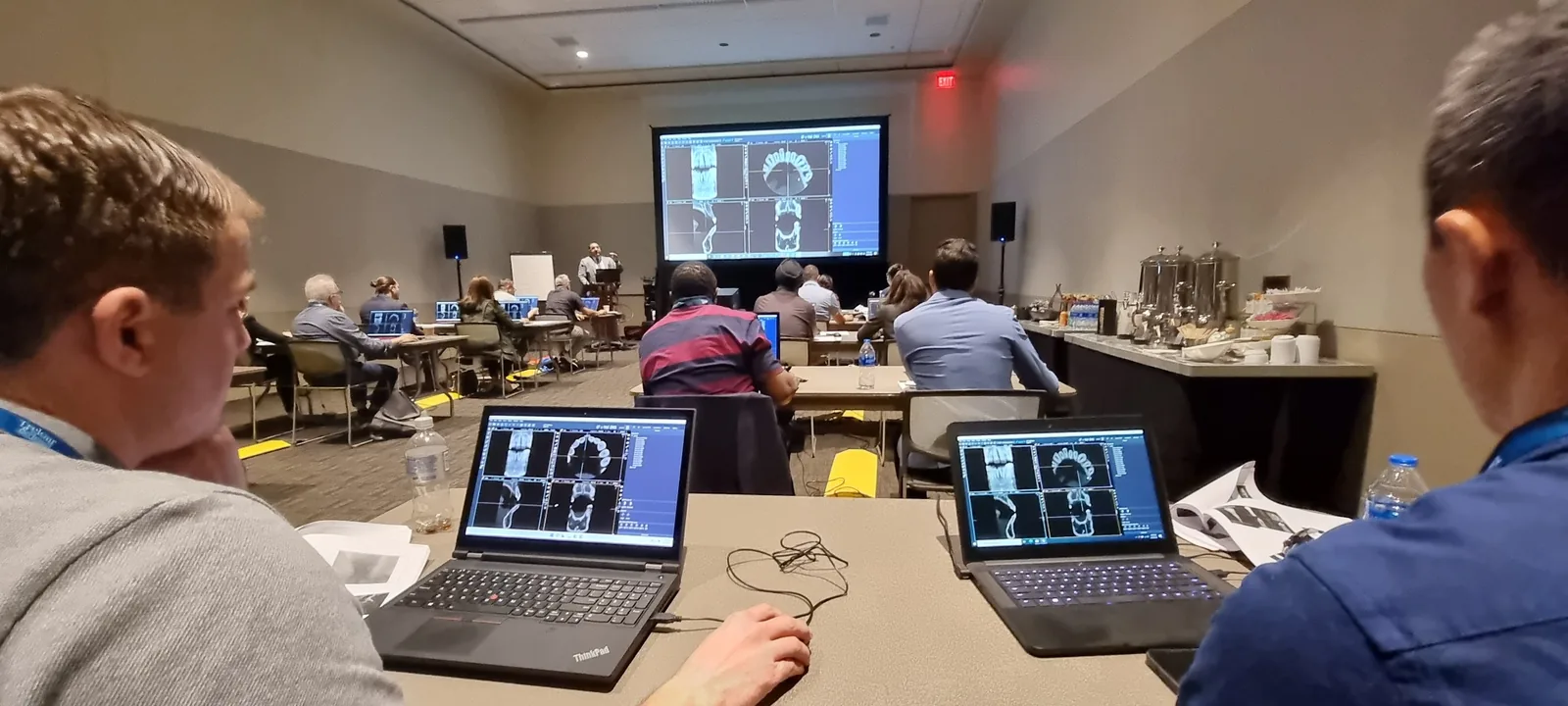
Why this is not a typical course
LESS PASSIVE WATCHING.
MORE DIAGNOSTIC THINKING.
There is a difference between recognizing an image after someone explains it and knowing what to do when that image appears in your own practice.
What traditional lectures often emphasize
- Watching the instructor interpret cases
- Memorizing textbook appearances
- Learning software features without diagnostic context
- Hearing about AI without testing its clinical limitations
What you will practice in Porto
- Interpreting challenging clinical cases yourself
- Defending a differential diagnosis and identifying uncertainty
- Connecting acquisition and visualization choices to diagnostic performance
- Testing AI workflows and critically evaluating their output
The clinical challenges
WHAT YOU OVERLOOK
CAN CHANGE THE TREATMENT PLAN.
Not another tour of impressive scans. Real questions, difficult distinctions, and a disciplined approach to interpretation.
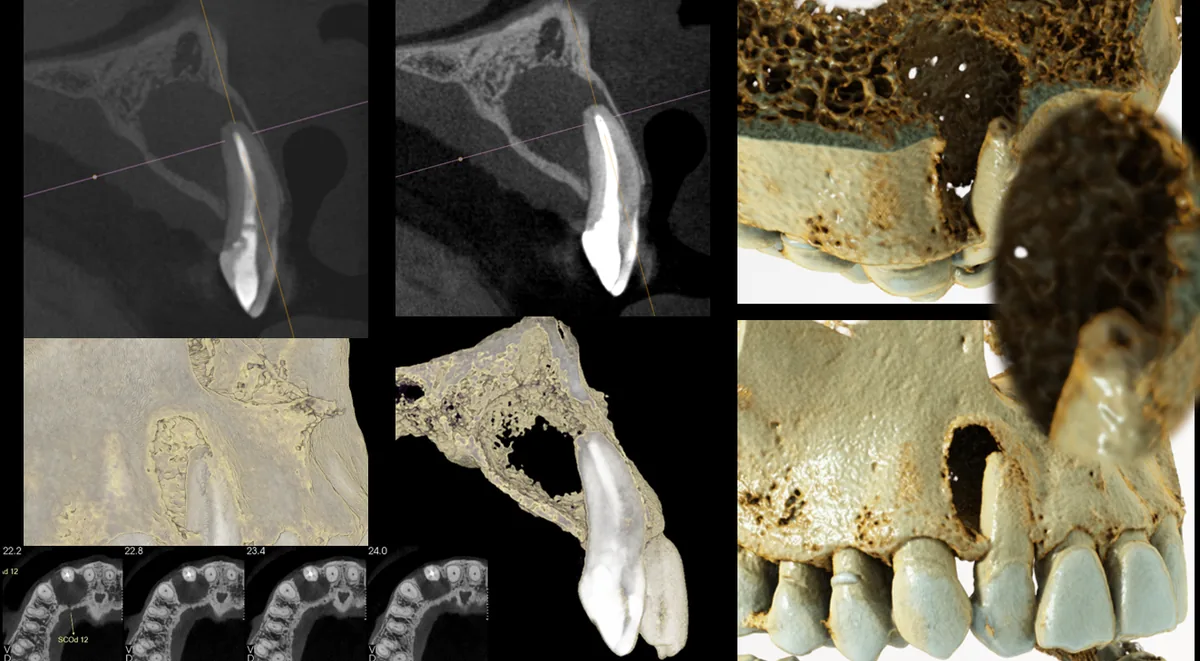
THE PATHOLOGY YOU DIDN'T EXPECT
Look beyond the apex. Evaluate bone patterns, sinus findings, incidental abnormalities, and cases that demand a broader differential diagnosis.
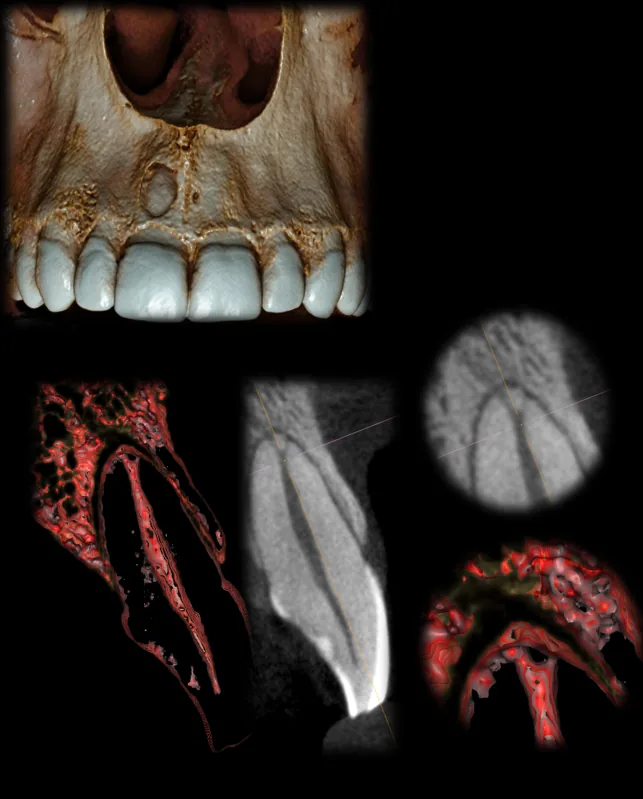
THE FRACTURE THAT ISN'T ONE
Challenge assumptions about vertical root fractures, cemental tears, lateral canals, artifacts, and other findings that can lead to inappropriate conclusions.
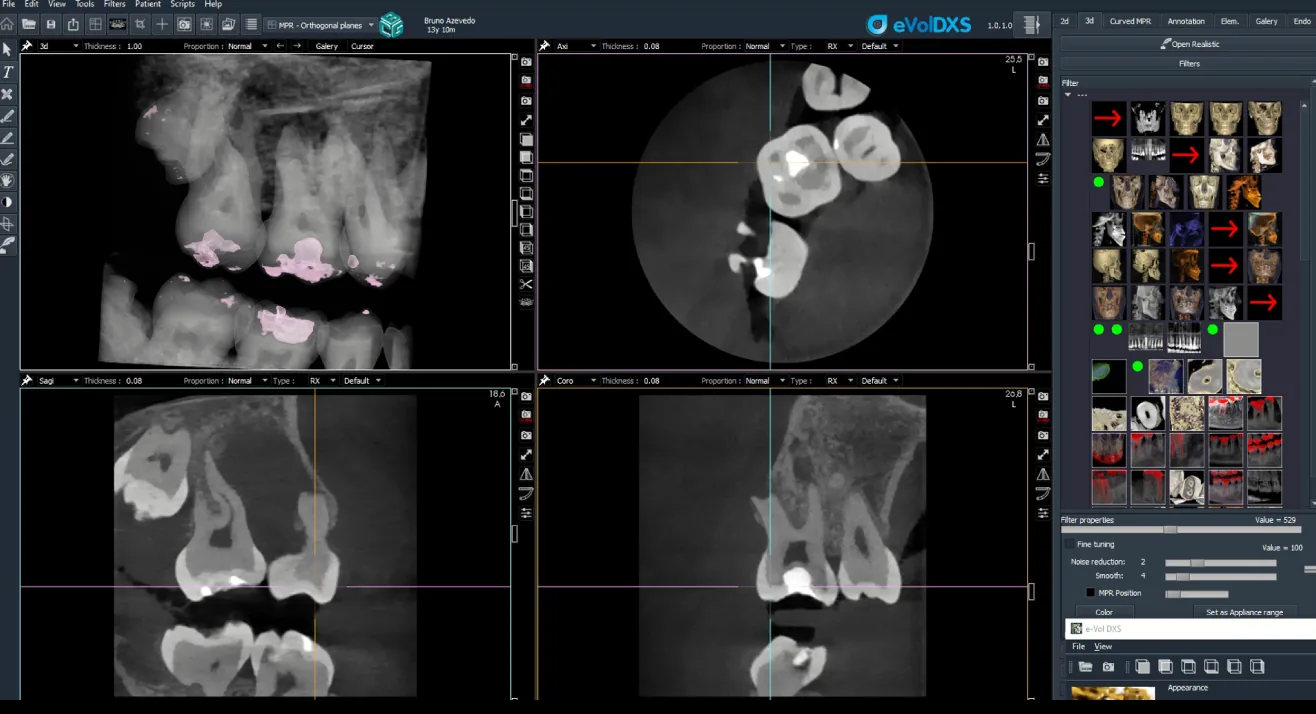
THE TECHNOLOGY BEHIND THE DIAGNOSIS
Understand how scanner capability, voxel size, focal spot, image quality, reconstruction, and visualization affect what you can reliably detect.
What you will take back to your practice
DON'T JUST LEARN MORE.
SEE DIFFERENTLY.
A radiologist's interpretation framework
Approach every volume systematically, including anatomy, pathology, and findings beyond the referring tooth.
Better discrimination of diagnostic look-alikes
Work through fracture mimics, cemental tears, anatomical variations, and lesions with overlapping appearances.
A clearer understanding of imaging limitations
Know when resolution, artifacts, acquisition, and reconstruction support or undermine diagnostic confidence.
Practical AI skills, not just AI headlines
Explore hands-on applications, prompt design, verification, and the risks of plausible but incorrect AI answers.
The AI component
AI IS NOT THE FUTURE SLIDE
AT THE END OF THE LECTURE.
It is part of the hands-on experience.
Work alongside Paula Caffer, PhD, to explore how AI can support clinical reasoning, research, patient communication, and professional workflows, while learning why fluent output is not the same as reliable evidence.
Technology should make your judgment stronger, not replace it.
Your educators
EXPERTISE THAT RARELY SHARES
THE SAME CLASSROOM.
Clinical interpretation through the lens of two specialties, paired with scientific expertise in AI.
Bruno Azevedo, DDS, MS
Board-Certified Oral & Maxillofacial Radiologist and Endodontist. More than two decades of experience with CBCT, teaching dentists internationally how to identify clinically consequential findings and interpret imaging with greater discipline.
Paula Caffer, PhD
AI researcher and educator. Brings a scientific, critical, and practical approach to the use of artificial intelligence in dentistry and professional practice.
The European premiere
TWO DAYS IN PORTO.
AN EXPERIENCE BUILT FOR SERIOUS CLINICIANS.
When15–16 January 2027
WherePorto, Portugal
FormatIn-person · Hands-on
AudienceDentists and dental specialists
AvailabilityLimited seats available
RegistrationPriority list now open
Exact venue, tuition, daily timetable, and equipment requirements will be announced with registration details.
Before you apply
QUESTIONS WORTH ASKING.
Yes. The course is positioned for clinicians who want to move beyond basic navigation and deepen their diagnostic reasoning through difficult cases.
Clinical case interpretation is central to the hands-on format, including subtle and challenging findings relevant to endodontics.
Yes. It is designed around applied exercises and critical evaluation, not simply a lecture on AI trends.
No. Joining the list means you receive registration information first. Enrollment will be confirmed separately once registration opens.
Priority registration notification
THE NEXT LEVEL OF CBCT INTERPRETATION STARTS HERE.
Porto. January 15–16, 2027. A maximum of 50 dentists.
Get the first announcement of tuition, venue, and enrollment details for the European premiere of our advanced CBCT interpretation and AI hands-on course.
No payment today. No obligation to enroll.
This is an expression of interest, not a reservation or guaranteed seat. You will receive an email asking you to confirm your subscription.
Questions? bruno@conebeamguy.com